Sri Lanka's spice industry has experienced notable developments and achievements in recent times. Here are some key updates:
Record-Breaking Export Revenues in 2024
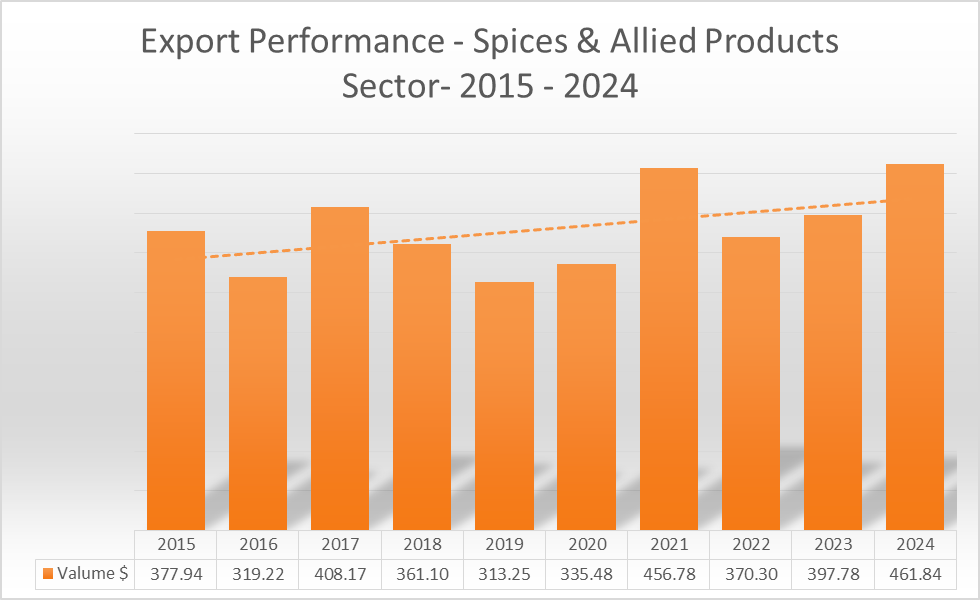
In 2024, Sri Lanka achieved its highest-ever export earnings, totaling $16.17 billion, marking a 7.06% year-on-year growth. This remarkable performance was driven by $12.7 billion in merchandise exports (a 6.67% increase) and $3.46 billion in service exports (an 8.51% rise). The strong performance across key sectors, including spices, contributed to this success.
Growth in Spice Exports
Export earnings from spices and concentrates increased by 16.11% year-on-year to $461.85 million in 2024. This growth was primarily driven by significant increases in exports of pepper (90.14%) and cinnamon (3.87%). Notably, pepper exports to India surged by 91.35% compared to the previous year.
Global Market Trends
The global cinnamon market is projected to grow by $412.9 million from 2024 to 2028, with a compound annual growth rate (CAGR) of approximately 7.97%. This growth is attributed to the rising awareness about the health benefits of cinnamon and its increasing application in pharmaceuticals.
Participation in International Trade Shows
Sri Lankan spice companies have actively participated in international trade events to showcase their products. For instance, Jayanath Spices successfully attended GulFood 2025 in Dubai, one of the world's largest food and beverage trade shows, highlighting premium Ceylon Cinnamon and a diverse range of high-quality spices to a global audience.
Geographical Indication (GI) Certification for Ceylon Cinnamon
Sri Lanka has made significant strides in obtaining Geographical Indication (GI) certification for Ceylon Cinnamon. Forty-five farmers and processors met the GI requirements and obtained certification, making them the country's first-ever GI-certified Ceylon Cinnamon growers. This certification enhances the global recognition and value of Sri Lankan cinnamon.
Domestic Consumption and Production Outlook
Sri Lanka's spice consumption is projected to reach approximately 127,000 metric tons by 2028, up from 122,000 metric tons in 2023, reflecting an annual growth rate of 0.7%. On the production front, the country's spice output is expected to grow from 110,000 metric tons in 2023 to around 121,000 metric tons by 2028, representing an annual growth rate of 1.5%.
These developments underscore the robust growth and global competitiveness of Sri Lanka's spice industry, positioning it as a key player in the international spice market.
In December 2024, Sri Lanka's merchandise exports reached US$ 1,042.5 million, marking a 4.06% increase compared to December 2023. This growth was driven by sectors including Apparel & Textiles, Tea, Rubber-based products, Coconut-based products, Spices & Concentrates, and Food & Beverages.
To further bolster the spice sector, the Sri Lanka Export Development Board (EDB) organized the country's participation in international trade fairs. Notably, Sri Lanka showcased its certified organic agricultural products, such as spices, at 'BioFach 2025' held from February 11-14, 2025, in Nuremberg, Germany.
The Ceylon spice market is influenced by several key factors, including production trends, export performance, global demand, regulatory developments, and challenges faced by the industry. Here’s an in-depth look at the current market dynamics:
1. Production Trends
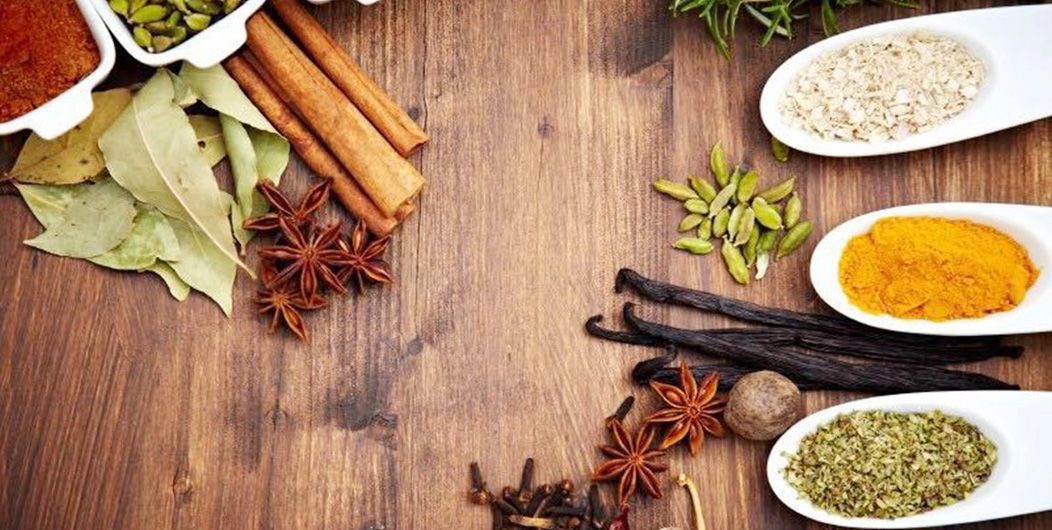
Key Spices: Sri Lanka is renowned for its premium-quality Ceylon cinnamon, pepper, cloves, nutmeg, cardamom, and vanilla.
Regional Production: Major spice-producing regions include Matale, Kandy, Kegalle, Ratnapura, and Badulla.
Yield Growth: Production of Ceylon cinnamon and pepper has been increasing due to improved cultivation techniques and farmer support programs.
Organic Farming: There’s a rising trend toward organic and sustainable farming, driven by global demand for chemical-free spices.
2. Export Performance
Record Export Earnings: The spice sector earned $461.85 million in 2024, marking a 16.11% year-on-year increase.
Top Export Destinations:
Ceylon Cinnamon – USA, Mexico, Peru, and EU countries
Black Pepper – India, Germany, and UAE
Cloves & Nutmeg – Middle East and Europe
Growth Drivers:
Surge in Indian demand for Sri Lankan pepper (+91.35% increase).
GI certification for Ceylon Cinnamon boosting its value in premium markets.
Free Trade Agreements (FTAs) with China and India opening new export opportunities.
3. Global Market Demand & Trends
Cinnamon Market Growth: The global cinnamon market is expected to grow by $412.9 million from 2024-2028, driven by its rising use in health products and pharmaceuticals.
Shift to Natural Ingredients: Increasing global preference for natural and organic spices over synthetic flavors.
E-commerce Boom: Digital platforms like Amazon, Alibaba, and niche organic spice stores are expanding direct-to-consumer spice sales.
Increased Use in Functional Foods: Spices are gaining traction in health and wellness products, such as cinnamon-infused teas, turmeric supplements, and black pepper extracts.
4. Regulatory & Trade Developments
GI Certification for Ceylon Cinnamon: The first 45 Sri Lankan cinnamon growers received GI certification in 2024, improving market differentiation.
New EU Pesticide Regulations: Stricter MRL (Maximum Residue Limits) policies require Sri Lankan exporters to comply with stringent safety standards.
India-Sri Lanka Trade Relations:
India removed certain trade restrictions on Sri Lankan spices, increasing cross-border spice exports.
The Indo-Sri Lanka FTA (ISFTA) offers reduced tariffs on Ceylon spices.
Competition from Other Spice-Producing Countries: Sri Lanka faces increasing competition from Vietnam (pepper), Indonesia (nutmeg), and Madagascar (cloves & vanilla).
High Production Costs: Rising costs of labor, transportation, and processing impact profitability.
Supply Chain Bottlenecks: Global shipping disruptions and rising freight costs pose logistical challenges.
6. Future Outlook
Expansion into New Markets: Efforts to penetrate China, Japan, and Middle Eastern markets are increasing.
Value Addition & Processing: Growth in spice oil and extract production is enhancing export revenue.
Sustainable & Fair Trade Certification: More Sri Lankan spice brands are adopting Fair Trade and Organic certifications to meet premium market demand.
Government Initiatives: The Export Development Board (EDB) and Spice Council of Sri Lanka are promoting high-value branding and international trade participation.
Conclusion
Sri Lanka’s Ceylon spice market is on a growth trajectory, fueled by increasing global demand, GI certification for Ceylon Cinnamon, and strong export performance. However, challenges like climate change, high production costs, and regulatory hurdles remain. Future success will depend on sustainability efforts, market diversification, and value-added spice production.
The Sri Lankan spice industry, while a global leader in premium spices, faces several domestic challenges. Below is an analysis of these challenges and potential solutions:
1. Climate Change & Unpredictable Weather
Challenge:
Erratic rainfall & droughts impact spice yield and quality.
Rising temperatures affect soil fertility and pest infestations.
Solutions:
Promote climate-resilient spice varieties (drought-resistant cinnamon and pepper).
Expand drip irrigation & water conservation techniques.
Train farmers on climate-smart agriculture practices.
Strengthen reforestation and agroforestry programs to protect spice-growing areas.
2. High Production Costs & Labor Shortages
Challenge:
Rising costs of fertilizers, transport, and labor reduce profit margins.
Shortage of skilled labor, especially for cinnamon peeling and processing.
High cost of organic certification limits adoption.
Solutions:
Provide subsidized fertilizers and financial support for spice farmers.
Increase mechanization in spice processing (e.g., automated cinnamon peeling).
Conduct training programs to encourage youth participation in spice farming.
Offer incentives for organic spice farming to offset certification costs.
3. Quality Control & Standardization Issues
Challenge:
Inconsistent quality due to traditional processing methods.
Some exports face rejections due to pesticide residues.
Lack of traceability systems for spices.
Solutions:
Implement Good Agricultural Practices (GAP) and Good Manufacturing Practices (GMP).
Strengthen laboratory testing facilities to ensure compliance with international standards.
Introduce blockchain-based traceability systems to track spice origins and quality.
Support farmers with training in organic and pesticide-free cultivation.
4. Competition from Other Spice-Producing Countries
Challenge:
Vietnam, Indonesia, and India produce spices at lower costs.
Lack of aggressive marketing & branding for Ceylon spices.
Slow adoption of value-added products (essential oils, spice extracts).
Solutions:
Enhance the branding of "Ceylon Spices" to highlight premium quality.
Provide export incentives for value-added spice products.
Encourage spice-based startups and SMEs to innovate and diversify products.
Increase Sri Lanka's participation in global trade fairs & exhibitions.
5. Limited Access to Finance for Small Farmers
Challenge:
High interest rates & limited credit options for small-scale spice farmers.
Lack of investment in modern farming technologies.
Solutions:
Introduce low-interest loans & microfinance programs for spice growers.
Facilitate public-private partnerships (PPPs) to invest in modern spice farming techniques.
Encourage farmer cooperatives to improve collective bargaining power.
6. Supply Chain & Export Bottlenecks
Challenge:
Logistics delays & high shipping costs affect exports.
Inadequate storage & processing facilities lead to post-harvest losses.
Lack of direct market access for small-scale farmers.
Solutions:
Develop regional spice processing centers to reduce post-harvest losses.
Improve port infrastructure & streamline export procedures.
Promote direct farmer-to-exporter connections through digital platforms.
Establish government-led spice export hubs to facilitate smoother trade.
Conclusion
Sri Lanka’s spice industry has immense potential, but overcoming domestic challenges is key to maintaining global competitiveness. Sustainable farming, mechanization, quality control, financial support, and branding efforts can help position Ceylon spices as a premium, globally sought-after product
Sri Lanka has been a celebrated destination for its spices since its early history, and bloody wars have been waged to conquer and control its spice trade. Ceylon cinnamon and pepper had been the celebrated spices of the world as far as the 15th Century.
Today Sri Lankan spice and concentrate industry are composed of a large variety of products, ranging from bulk spice products like true cinnamon to value-added essential oils. The sector is dominated by smallholders, and over 70% of cultivated land is smallholdings and home gardens. Sri Lanka exports around 30,000 tons of various kinds of spices annually.
Over 90% of the spice and allied products manufactured in Sri Lanka are consumed by the global food and beverage industry, the pharmaceutical industry, and the personal care product industry.
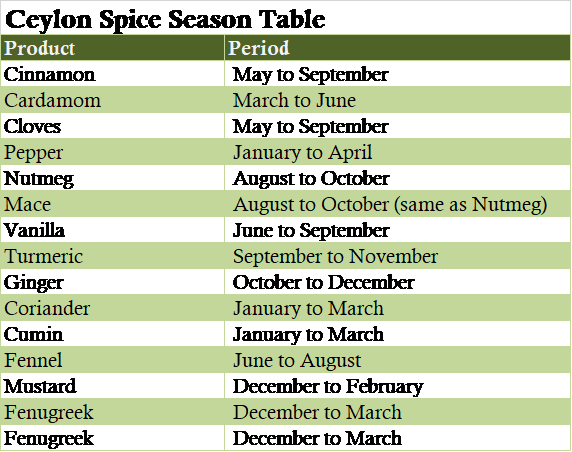
Sri Lanka, renowned as the "Spice Island", is home to some of the world’s most exquisite and flavorful spices. The following table provides a helpful guide to the seasons for harvesting key Sri Lankan spices so you can plan your purchases accordingly and enjoy the freshest products throughout the year.
How to Use the Spice Season Table
Freshness & Quality: Knowing when each spice is harvested ensures that you receive the freshest and most flavorful products. Spices like cloves and cardamom, for example, are best enjoyed right after their harvest season.
Planning for Wholesale Orders: The harvest season is crucial for bulk ordering so that your business can have a steady supply of the highest-quality spices.
Unique Characteristics by Season: The harvest season can influence the intensity and aroma of each spice, making it important for culinary professionals to source spices at their peak freshness.
At Thapprobane General Trading LLC, we provide premium Sri Lankan spices to help elevate your culinary creations with authentic flavors and health benefits. Contact us to place an order, inquire about bulk pricing, or learn more about our spice offerings.
This table will be a useful resource for both culinary professionals and spice traders to understand the optimal harvest seasons for each of Sri Lanka’s spices. Let me know if you need any further modifications!
Jaya Farm, a prominent Sri Lankan company specializing in poultry farming and the export of Ceylon spices, received the "Emerging Exporter of the Year" award at the 25th Presidential Export Awards for the financial year 2022/23. This accolade, presented by the Sri Lanka Export Development Board (EDB), recognizes outstanding contributions to the country's export sector and economic advancement.
Established in 1993, Jaya Farm has evolved from a small-scale poultry operation into a diversified exporter of products such as Ceylon cinnamon, pepper, cloves, nutmeg, mace, and various poultry items. The company's commitment to quality and innovation has significantly bolstered its presence in both local and international markets.
The "Emerging Exporter of the Year" award underscores Jaya Farm's dedication to excellence and its pivotal role in enhancing Sri Lanka's export landscape.
 " THAPPROBANE – From Farm to Flavor, We Deliver Quality. "